
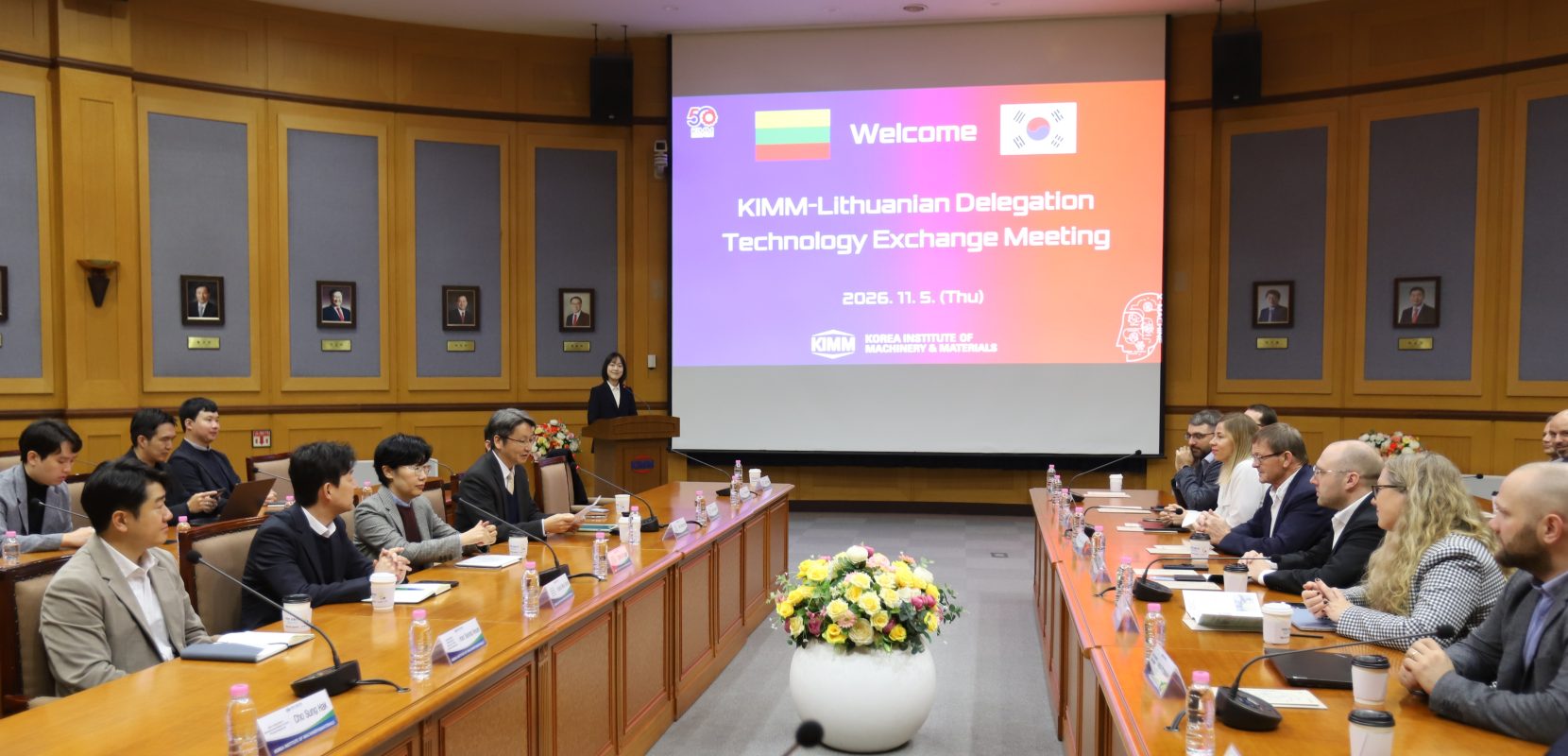
South Korea is one of the world’s leading semiconductor and electronics manufacturing countries, with continued investments in next-generation technologies, advanced manufacturing, and scientific research. For Lithuania’s laser and photonics sector, this creates opportunities not only to offer technological solutions but also to work with Korean partners on emerging scientific and industrial challenges. Exploring these opportunities was the focus of the Lithuanian Laser & Photonics Science and Business Mission to South Korea, held on November 2–6, 2026.
South Korea’s ambition to maintain its competitiveness in high technology is reflected in its long-term science and industrial policies. The country’s national strategic technology development plan identifies twelve priority areas, including semiconductors and displays, artificial intelligence, robotics and advanced manufacturing, quantum technologies, and next-generation communications. These priorities go beyond strengthening established industries. South Korea is investing in emerging technologies, research infrastructure, and innovations that could underpin future industrial sectors. Its 2026 research and development budget plans include a substantial increase in funding, with artificial intelligence, semiconductors, and other strategic technologies remaining among the key investment priorities.
These developments are particularly relevant to Lithuania’s laser and photonics sector because of the close relationship between laser technologies and advanced manufacturing. Lasers are used not only in scientific experiments but also in industrial processes requiring exceptional precision, the processing of challenging materials, and the fabrication of microscopic structures.
Semiconductors and Advanced Electronics
South Korea’s semiconductor industry is a cornerstone of the country’s economy and technological development. Alongside its traditional strength in memory chip manufacturing, increasing attention is being paid to advanced semiconductor packaging, the integration of different semiconductor components, and new materials. These developments place increasingly demanding requirements on manufacturing precision, material processing quality, and process reliability. One area of research is the use of glass substrates in next-generation electronic packaging. Glass offers properties that may be advantageous for high-density electrical interconnections and increasingly complex electronic systems.
However, manufacturing such substrates also presents significant technological challenges. Extremely precise microscopic holes must be produced while maintaining surface quality and avoiding material damage. Scientific literature identifies laser processing, including ultrafast laser techniques and laser-induced selective etching, as potential approaches to addressing these challenges. This is an area where Lithuania’s expertise could be particularly relevant. Ultrafast lasers, precision micromachining technologies, and process control solutions developed in Lithuania may contribute to improving these manufacturing methods. However, industrial adoption requires careful consideration not only of processing precision but also of speed, repeatability, reliability, and economic viability. Cooperation with South Korean research institutions and electronics manufacturers could therefore help identify specific technological solutions and assess their performance under real manufacturing conditions.
Advanced Manufacturing and Photonics Technologies
Another important direction in South Korea’s technological development is advanced manufacturing, including automation, robotics, and new production methods. As electronic components become more complex and precision requirements increase, there is a growing need for technologies capable of reliably processing smaller structures and a wider range of materials. Lithuania’s laser and photonics expertise extends well beyond the development of laser sources. The country’s technology ecosystem also includes laser micromachining systems, optical components and coatings, optical measurement equipment, and specialized industrial solutions.
These capabilities could support the development of new electronics manufacturing processes, improvements in material micromachining, and the integration of laser technologies into automated production lines. In this field, the performance of an individual technology is only part of the equation. Industrial applications depend on the stability, throughput, and scalability of the entire manufacturing process. Closer cooperation between laser technology developers and industrial users could therefore help identify specific technological needs and develop solutions tailored to them.
High-Intensity Lasers and Fundamental Research
The potential for cooperation between Lithuania and South Korea extends beyond industrial technologies. Both countries have expertise in high-intensity lasers and their applications in scientific research. At the Gwangju Institute of Science and Technology (GIST), South Korea’s Center for Relativistic Laser Science (CoReLS) operates a 4-petawatt laser system. This facility supports fundamental research into the interaction of extremely intense laser radiation with matter, including relativistic plasma physics and strong-field quantum electrodynamics.
Lithuania also has extensive experience in developing high-intensity ultrashort-pulse laser systems, their components, and light sources for scientific experiments. Lithuanian laser technologies are used in international research infrastructure, while Lithuanian scientists participate in collaborative high-intensity laser research projects. International cooperation is particularly important in this field, as experiments require complex and costly infrastructure. Combining the expertise of different research groups makes it possible to address scientific challenges that would be more difficult for individual institutions to tackle independently. Cooperation between Lithuanian and South Korean researchers could involve both the further development of laser systems and their components and joint fundamental research using existing infrastructure and complementary expertise.
From Shared Interests to Long-Term Partnerships
One of the strengths of Lithuania’s laser sector is the close connection between science and industry. Over six decades, the country has developed an ecosystem encompassing fundamental laser physics research, laser system and optical component development, and the implementation of laser technologies in industrial applications. South Korea, meanwhile, stands out for its advanced high-tech industries, large-scale manufacturing capabilities, and substantial investments in scientific research. These complementary strengths provide a foundation for mutually beneficial cooperation, from developing new technological solutions to testing and implementing them in industrial environments.
“South Korea’s technological strengths and Lithuania’s expertise in laser and photonics technologies complement each other very well. We see great potential to explore new solutions together and address shared technological challenges,” says Kristina Ananičienė, Executive Director of the Lithuanian Laser Association.
The Lithuanian Laser & Photonics Science and Business Mission to South Korea, held on November 2–6, provided an opportunity to discuss these technological connections directly with Korean researchers and industry representatives. The meetings brought together expertise from both countries and enabled discussions on current research challenges, technological developments, and potential areas for cooperation. However, shared technological interests alone are not enough to establish lasting partnerships. Joint research and technology development projects require continuous dialogue, trust, and clearly defined objectives. Maintaining existing relationships is therefore just as important as establishing new ones and identifying concrete opportunities for collaboration.
The complementary strengths of Lithuania’s and South Korea’s technology ecosystems provide a solid foundation for such cooperation. Its long-term value will depend on how effectively this potential can be translated into joint research, technology development, and practical solutions.