
Month: October 2026

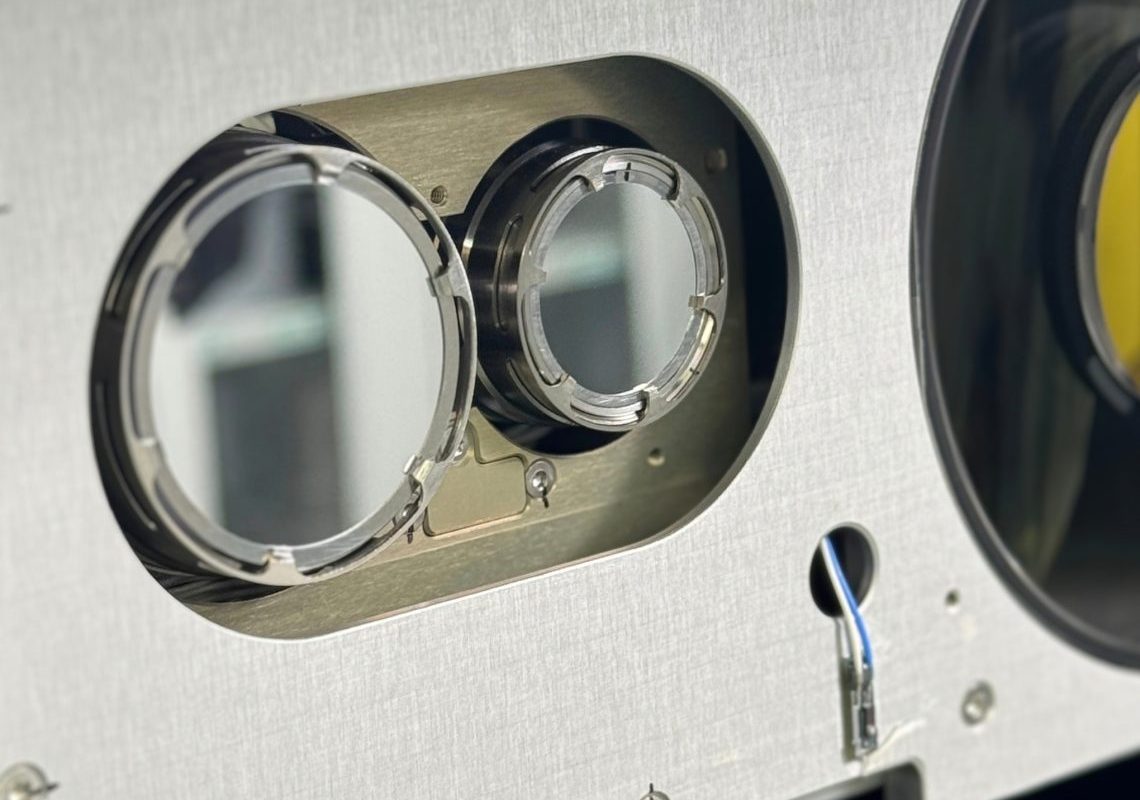
Astrolight’s laser communication terminal ATLAS-1 aboard the University of Athens’ ERMIS-3 satellite. Source: National and Kapodistrian University of Athens (source: astrolight.com)
Astrolight’s Laser Communication Technology Begins Routine Data Transmission from Space to Earth

Lithuanian space and defence technology company Astrolight, together with its partners in Greece, has successfully commissioned a laser communication system capable of transmitting data from an orbiting satellite to a ground station. This marks the first time Astrolight’s laser communication technology has operated in orbit and enabled routine data transmission to Earth. The system now operates autonomously, with both the satellite terminal and ground station managed remotely from Lithuania.

The achievement was announced on 8 October by Astrolight, together with the National and Kapodistrian University of Athens and Aristotle University of Thessaloniki.

Data Transmission at 1 Gbps

The laser communication link was established between two Astrolight-developed systems: the ATLAS-1 laser communication terminal installed aboard a satellite and an optical ground station in Greece. ATLAS-1 is integrated into ERMIS-3, a nanosatellite developed by the University of Athens, while the data is received by Aristotle University of Thessaloniki’s HolOGS-1 optical ground station, located in the Holomondas Mountains in Greece. Astrolight upgraded the station to its OGS-2.5 configuration. Both systems were developed as part of the ERMIS and PeakSat missions, supported by the European Space Agency (ESA).

The system currently transmits data at 1 gigabit per second (Gbps), while technical assessments conducted by the company indicate that it could support speeds of up to 10 Gbps. The first optical link was successfully established during the satellite’s first active pass over the ground station. By the third pass, both systems had been fully calibrated and began operating autonomously according to a predefined schedule. Within a week of the initial connection, the system had transitioned to routine operations, with communication links now established twice daily and both systems managed remotely from Lithuania.

One of the most significant aspects of this achievement is not only the successful transmission of data using laser technology, but also the system’s demonstrated ability to establish and maintain optical links autonomously. According to Astrolight, reliable communication was achieved during both daytime and nighttime operations, including under more challenging conditions when the satellite was low above the horizon or when clouds and other obstacles intermittently obstructed the optical path. Following in-orbit calibration, optical link availability exceeded 85% during satellite passes with elevation angles above 15 degrees. When the optical link was interrupted, ATLAS-1 was able to re-establish communication in less than 10 milliseconds without requiring an additional scanning procedure.

According to Dalius Petrulionis, Co-founder and Chief Technology Officer of Astrolight, the company is among the first to demonstrate a fully autonomous end-to-end laser communication link using its own systems in both space and on the ground, operated entirely remotely. Astrolight aims to make high-speed optical communication a practical, routinely available service for satellite operators without the need for continuous on-site supervision.

Laser Communication as an Alternative to Radio-Frequency Data Transmission

Most satellites currently transmit data to Earth using radio-frequency communication. Laser communication offers an alternative, enabling large volumes of data to be transmitted through a narrow optical beam. One of the technology’s key advantages is its resistance to radio-frequency interference. In addition, the narrow laser beam makes interception of transmitted data more difficult, while optical communication technologies offer the potential for significantly higher data transmission rates. These capabilities are becoming increasingly relevant as satellite data volumes grow and demand rises for reliable, high-speed and secure communication solutions.

Laurynas Mačiulis, Co-founder and CEO of Astrolight, highlights that electronic warfare threats, GPS interference and the vulnerability of communication infrastructure are increasing the importance of alternative communication technologies. He emphasises the need for Lithuania and Europe to develop solutions that are resistant to radio-frequency interference and reduce dependence on individual elements of communication infrastructure.

Next-Generation Laser Communication Systems

Following the successful commissioning of ATLAS-1 and OGS-2.5, Astrolight continues to develop its space-to-ground laser communication technologies. In addition to the operational optical ground station in Greece, the company is building another station in Greenland in cooperation with the European Space Agency. Astrolight is also developing three next-generation laser communication terminals: ATLAS-2, ATLAS-X-MINI and ATLAS-X.

ATLAS-2 and ATLAS-X-MINI are being designed to support communication speeds of up to 2.5 Gbps for inter-satellite and space-to-ground links. Certain configurations of these terminals could potentially achieve speeds of up to 100 Gbps. The larger ATLAS-X terminal is being developed to support data transmission rates of up to 400 Gbps in accordance with the ESTOL standard. Its commissioning is planned for 2028–2029 as part of ESA’s HydRON project, while qualification testing of ATLAS-2 and ATLAS-X-MINI is expected to be completed in 2026.

The successful operation of ATLAS-1 in orbit marks an important milestone in Astrolight’s technological development. Laser communication systems developed in Lithuania are now being used for routine data transmission from space to Earth, providing a foundation for further technological advancement and commercial applications.

Source:
astrolight.com

lrt.lt

Ultra-High-Resolution Microscope Developed in Lithuania Using Lithuanian Lasers

A team of researchers from the Life Sciences Center at Vilnius University, led by Assoc. Prof. Dr. Marijonas Tutkus, has developed “miEye”, an ultra-high-resolution fluorescence microscope capable of studying biological structures at the single-molecule level. To the researchers’ knowledge, it is the first fully operational microscopy system of its kind in Lithuania to be used for routine research. Lasers developed by Lithuanian manufacturer Integrated Optics played an important role in its development.

Exploring the World of Single Molecules

The resolution of conventional light microscopy is limited by the diffraction of light, making it difficult to distinguish extremely small structures located close to one another. Single-molecule localization microscopy (SMLM) overcomes this limitation, enabling researchers to obtain significantly more detailed images of biological structures.

This technique involves detecting signals from individual fluorescent molecules, precisely determining their positions, and reconstructing a super-resolution image from thousands of such measurements. It allows scientists to investigate cellular structures and the spatial distribution of molecules at a level of detail that conventional light microscopy cannot achieve.

The “miEye” system developed by Vilnius University researchers makes it possible to perform such experiments in Lithuania using equipment designed, built, and tailored to their specific research needs.

From an Open-Source Project to a Fully Functional Microscope

The development of “miEye” began in 2020, when Dr. Tutkus received funding from the Research Council of Lithuania for a scientific research project. One of its objectives was to develop an advanced microscopy system that would meet the laboratory’s research needs while remaining within the available budget.

Rather than purchasing a commercial microscopy system, the research team decided to build one themselves. They based their design on “miCube”, an open-source project developed by researchers in the Netherlands, and extended it with their own solutions.

One of these was an autofocus system designed to maintain stable focus during long experiments. The team also developed “microEye”, Python-based microscope control software, which they released as an open-source project.

As a result, the researchers created not only a fully functional instrument but also a flexible experimental platform that can be further developed and adapted to new research applications.

Lithuanian Lasers – a Key Component of the System

One of the main challenges in developing “miEye” was selecting suitable laser sources. Super-resolution fluorescence microscopy requires stable lasers with sufficient output power and a range of wavelengths. These lasers must also be compatible with other optical components and the microscope’s control system.

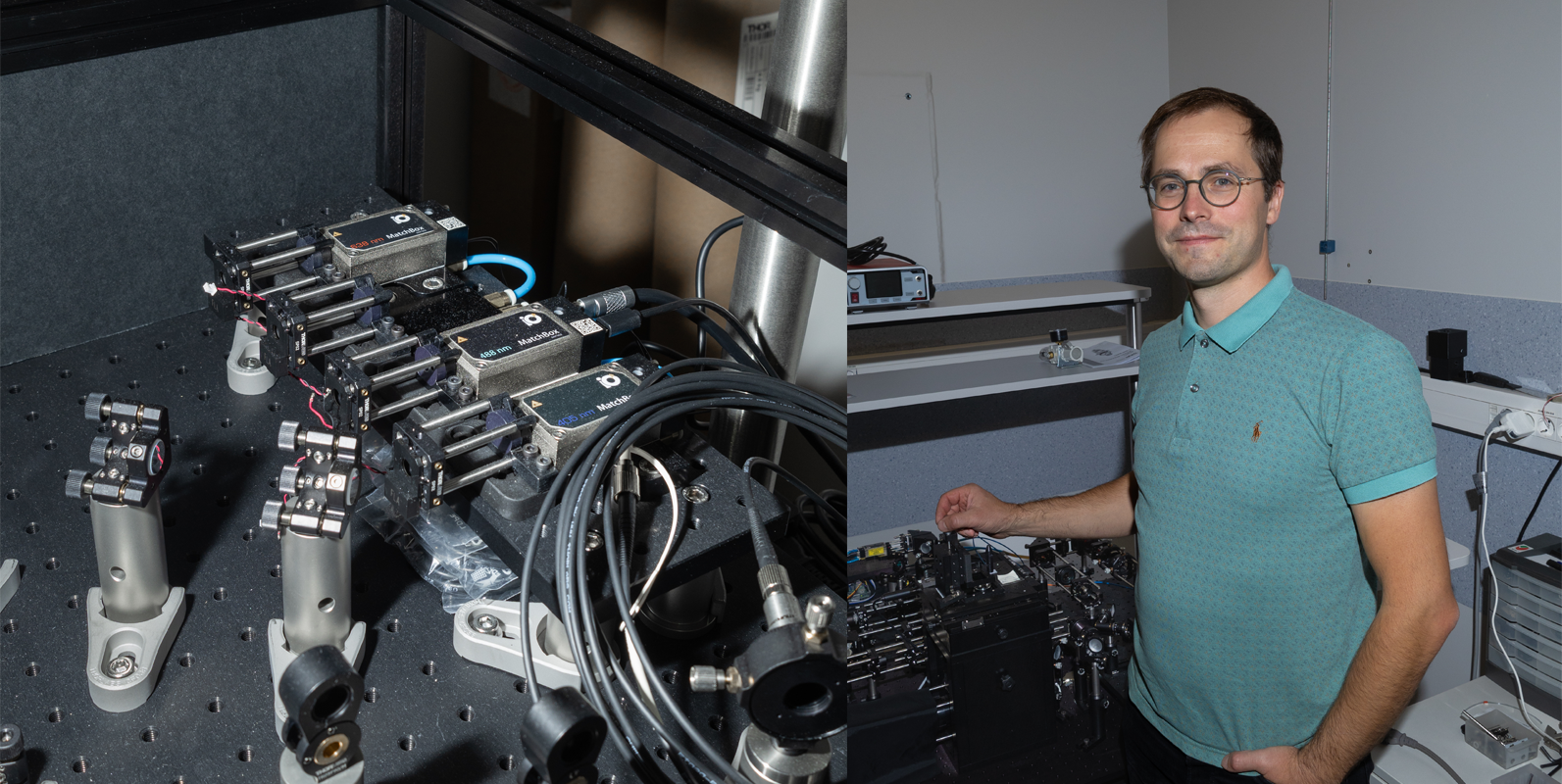
The researchers selected “MatchBox” lasers manufactured by the Lithuanian company Integrated Optics. Their compact design made it possible to integrate multiple laser sources into a limited space, while the open software control interface allowed the lasers to be directly integrated with the team’s “microEye” software.

The “miEye” system incorporates lasers operating at different wavelengths across the 405–830 nm range. They serve different purposes: some are used to excite fluorescent molecules, while the 830 nm laser is used for the autofocus system. Multiple excitation wavelengths enable researchers to work with different fluorescent labels and perform multicolour microscopy experiments.

Cost was another important consideration. The selected lasers enabled the researchers to develop a more versatile system without compromising on other components essential to their experiments. Over several years of collaboration, the team has incorporated nearly ten Integrated Optics laser products into its systems and is currently developing a second laser module.

“Collaborating with researchers who develop their own systems is one of the ways we improve our products. Only the end user can identify specific needs that we might not have anticipated ourselves. Their solutions and experience directly influence the development and improvement of our products. Marijonas Tutkus and his team’s project is an excellent example of this,” says Evaldas Pabrėža, CEO of Integrated Optics.

New Opportunities for Scientific Research in Lithuania

Today, “miEye” is already being used as a routine research instrument. According to its developers, it is the first fully functional SMLM microscope of its kind in Lithuania, enabling researchers to conduct super-resolution microscopy experiments in their own laboratory.

The significance of this achievement goes beyond the technical capabilities of the instrument itself. Having developed the system in-house, researchers have greater freedom to modify it, explore new experimental methods, and adapt the equipment to address specific scientific questions.

The story of “miEye” also highlights the broader potential of Lithuania’s high-tech ecosystem. Laser technologies developed in Lithuania are exported to research laboratories and industrial companies around the world, while also contributing to the development of new scientific capabilities at home.

Read more about the development of “miEye” and the application of “MatchBox” lasers in the case study published by Integrated Optics.

Building on this experience, Integrated Optics has developed ARA, a four-wavelength laser module (405, 488, 561 and 638 nm) that integrates all four excitation sources into a compact 65 × 40 × 10 mm housing, enabling OEM customers and researchers to further reduce the size of their instruments.